Nigeria: Communities Leading the Way to Better Health
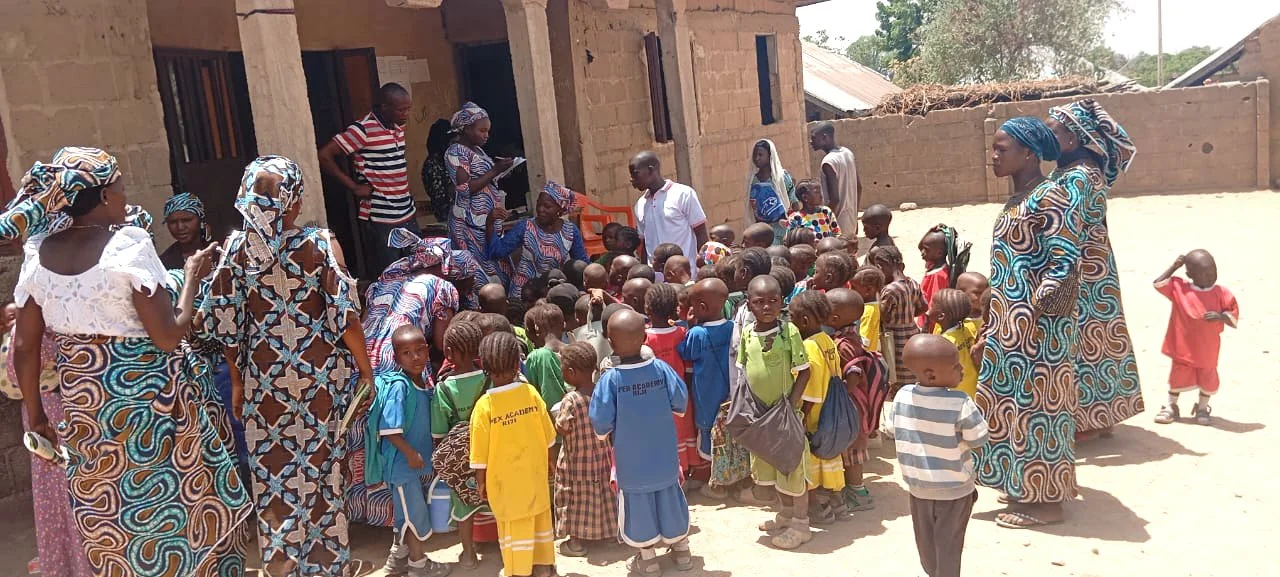
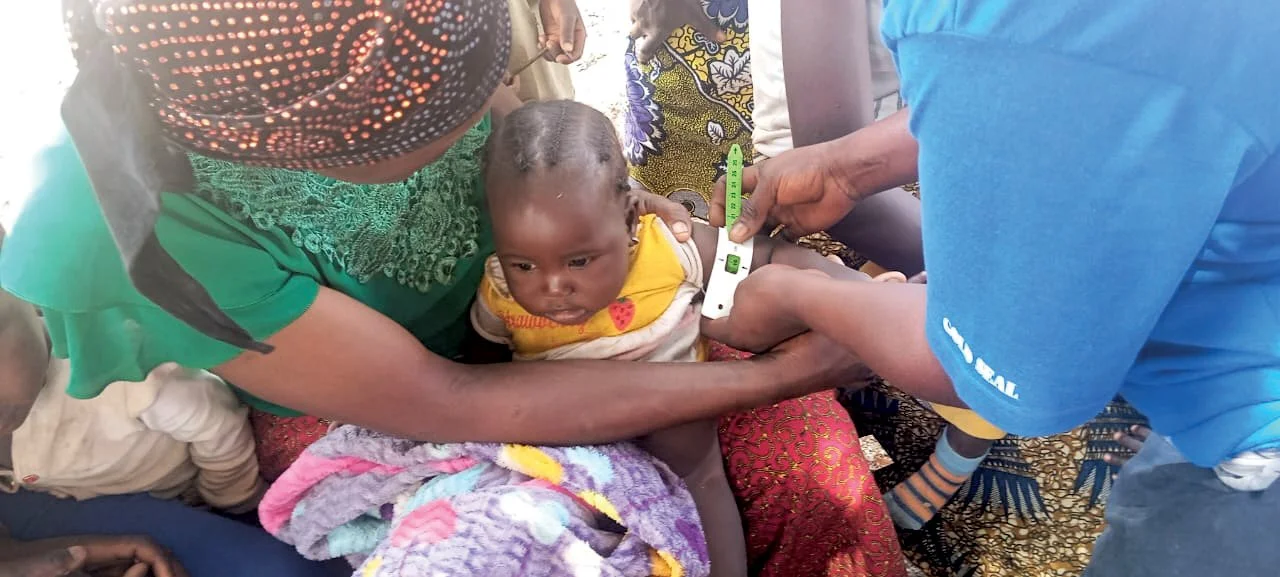
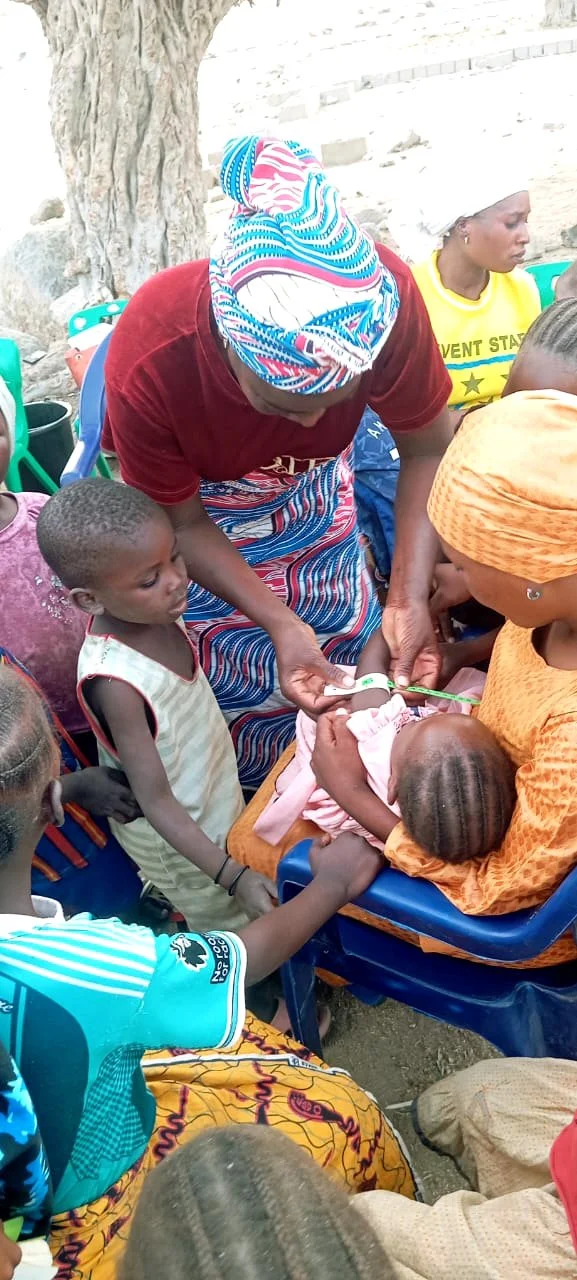
In Nigeria, Village Health Workers perform nutritional screenings for children under five years of age.
Thanks to your support GHM is partnering with the Lutheran Church of Christ in Nigeria (LCCN) in a Community-Based Health Program that is transforming rural communities through preventative health and community collaboration.
Back in 2011, GHM partnered with the LCCN to launch the SEED- SCALE approach to community health in 18 villages. SEED-SCALE is a community-centered approach focused on building on what is already working. Instead of bringing in outside solutions or focusing on problems, it starts by identifying successes and helping communities strengthen and expand them. By partnering with local leaders, villages, and organizations, the SEED-SCALE approach encourages communities to take ownership of their own progress and empowers people to improve their own health and overall quality of life.
A baby receives a Mid-Upper Arm Circumference (MUAC) screening, with a green result indicating healthy growth and nutrition.
An evaluation team from GHM, including GHM’s Director of Consulting, Christine Lindell Detweiler, Volunteer consultants Rebecca Hartwig, Brian Ahanotu, Joshua Ayodeji and another local consultant, and the LCCN health team visited eight communities over three days to assess the program’s impact. The team conducted key interviews and focus group discussions with women, men, village health workers, and village health and development committees. Since starting in 18 villages in 2011, the program expanded to 93 communities, where the health and mobile leadership teams train local volunteers in health promotion and disease prevention.
The original goals of this program were to reduce open defecation, increase household level handwashing, reduce water borne diseases, increase proper use of mosquito nets, decrease cases of malaria, decrease maternal mortality, and decrease mortality in children under five.
The results are profound. During the evaluation visit, communities reported significant improvements in hygiene, safe water storage, handwashing, mosquito net use, prenatal care, and growing confidence in local health services. Residents shared that villages are cleaner, preventive health practices are more common, and more women are seeking care before birth, an important step in a region with one of the world’s highest maternal and child mortality rates.
Perhaps the most remarkable outcome, states GHMs Director of Consulting, Christine Lindell Detweiler “I am impressed how community members were working together, pooling funds and resources, to improve their health and overall wellbeing.”
Rather than depending on outside funding, people are working together to raise money for boreholes, schools, simple health clinics, and tree planting. Christians and Muslims are working side by side to improve their communities, and neighboring villages are requesting to join the program after seeing participating villages with healthier children and cleaner environments.
While access to quality healthcare remains a challenge and many clinics still struggle to provide care, your ongoing support helps reduce illness before treatment is needed. The evaluation reaffirmed that sustainable change happens when people are empowered to identify problems, mobilize local resources, and work together toward sustainable solutions.