Healing and Curing

Image by Marjan Blan on Unsplash
“They had come to hear him and to be healed of their diseases; and those who were troubled with unclean spirits were cured.” (Luke 6:17)
In this verse in Luke, placing the healed and the cured in poetic parallelism suggests they are equivalent, but they also can be differentiated. For example:
In his Word & World article (Fall 1982), oncologist Richard Yadeau writes,
“The concepts intrinsic in the terms ‘healing’ and ‘curing’ are best analyzed when the individual is addressed as a triune being. Recognizing, then, that the triune being is composed of a physical entity, a psycho-social entity, and a spiritual entity, curing becomes that endeavor which rectifies a disease or disorder in one component of the triune being, while healing addresses the integration of these three components into a single entity, and is independent of the extent to which an individual’s physical body is cured.”
Or more simply, in his book Talking God, novelist, Tony Hillerman, recognized as an accurate observer of Indigenous people in the Southwest clarifies the difference between shamanic healing and medical cures in the Navaho culture:
“From the tiny speaker of the tiny recorder, Chee was hearing the same chant. Talking God summoning the yei to the Naakhai ceremony on the final night of the Yeibichai, calling them for the ritual which would heal Mrs. Agnes Tsosie and restore her to harmony. Not cure her, because Agnes Tsosie was dying of liver cancer. But heal her, return her to hozro, to harmony with her fate.”
I’m quite sure that a nine-day ceremony including dances, songs, prayers, chants, and sand paintings would indeed aid in returning Agnes Tsosie to hozro, just as did my brother’s singing hymns to our mother as she lay on her bed dying of cancer. Obviously, a patient and their friends, family, and even the medical staff would prefer to cure, but failing that, helping the patient to “heal” is a remarkable gift.
The New Testament offers another dimension to the notion of healing. Since the Greek word for “save” (sozo) can also mean “heal,” “Your faith has healed you,” (Matt 9:22) and “Your faith has saved you,” (Luke 18:42) are in fact say saying the same thing, which means the “saving” is finally “healing” at its fullest.
So, when the psalmist (Psalm 6) prays, “O, Lord heal me,” and then “Save my life,” what is he asking? Here we find “heal” and “save” also in poetic parallelism, which means, I think, that here too the psalmist prays he be renewed in both body and soul, as he himself clarifies when he prays:
“Have mercy on me, Lord, for I am faint;
heal me, Lord, for my bones are in agony.
My soul is in deep anguish.
How long, Lord, how long?”
(Psalm 6:2-3)
Then, after he had been “saved,” he says, “Depart from me all your workers of evil.”
Good, but what about us? Who among us might function as “workers of salvation?” Individually, perhaps the Good Samaritan, the firefighter who runs into burning building to save a person, the paramedic who responds to a 911 call, no matter where it takes her, or simply the good African or Mexican or German or Canadian or American “Samaritan” who stops to help those who are in need. Corporately there are many agencies who help the needy. You know their names, you support them, and you give thanks for the work they do.
A personal story: I was in Zimbabwe in 2001 when the country was in total disarray. For many, it was a time of “fear and trembling.” I saw good friends in abject poverty, people sitting in a line of cars literally overnight in order to buy petrol, and a group of Mugabe’s henchmen in pickup trucks with rifles patrolling the streets of Harare. When Mugabe supporters blew up the offices of the Daily News, Zimbabwe’s sole independent newspaper, I had passed the door only a seconds after the explosion. Money was so worthless that it had a “use by” date. I saw people bringing suitcases full of money to buy groceries (I brought home a trillion dollar bills to impress my son, a banker). These were people clearly in need of both healing and saving.
When I myself had no gasoline, I called a taxi to take me to church. When I said to the driver that perhaps I should not have come to Zimbabwe at that time since I was just another mouth to feed, he replied, “No, it is good that you have come, you have to go home and tell the story.”
Thus, this story. Granted it took place twenty-four years ago, but there are similar stories in other places happening every day, and it is our duty and privilege to be Good Samaritans to all of them.
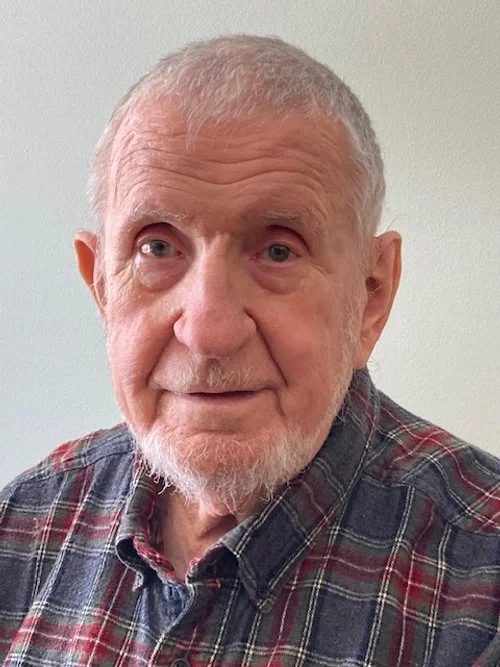
Fred Gaiser
Fred Gaiser is Professor Emeritus of Old Testament and Editor Emeritus of the journal Word & World at Luther Seminary in St Paul.
He is the author of the book Healing in the Bible.
At the seminary he was Director of the Luther Seminary in Zimbabwe program. He has taught often in Zimbabwe and other African countries.