A Place of Springs
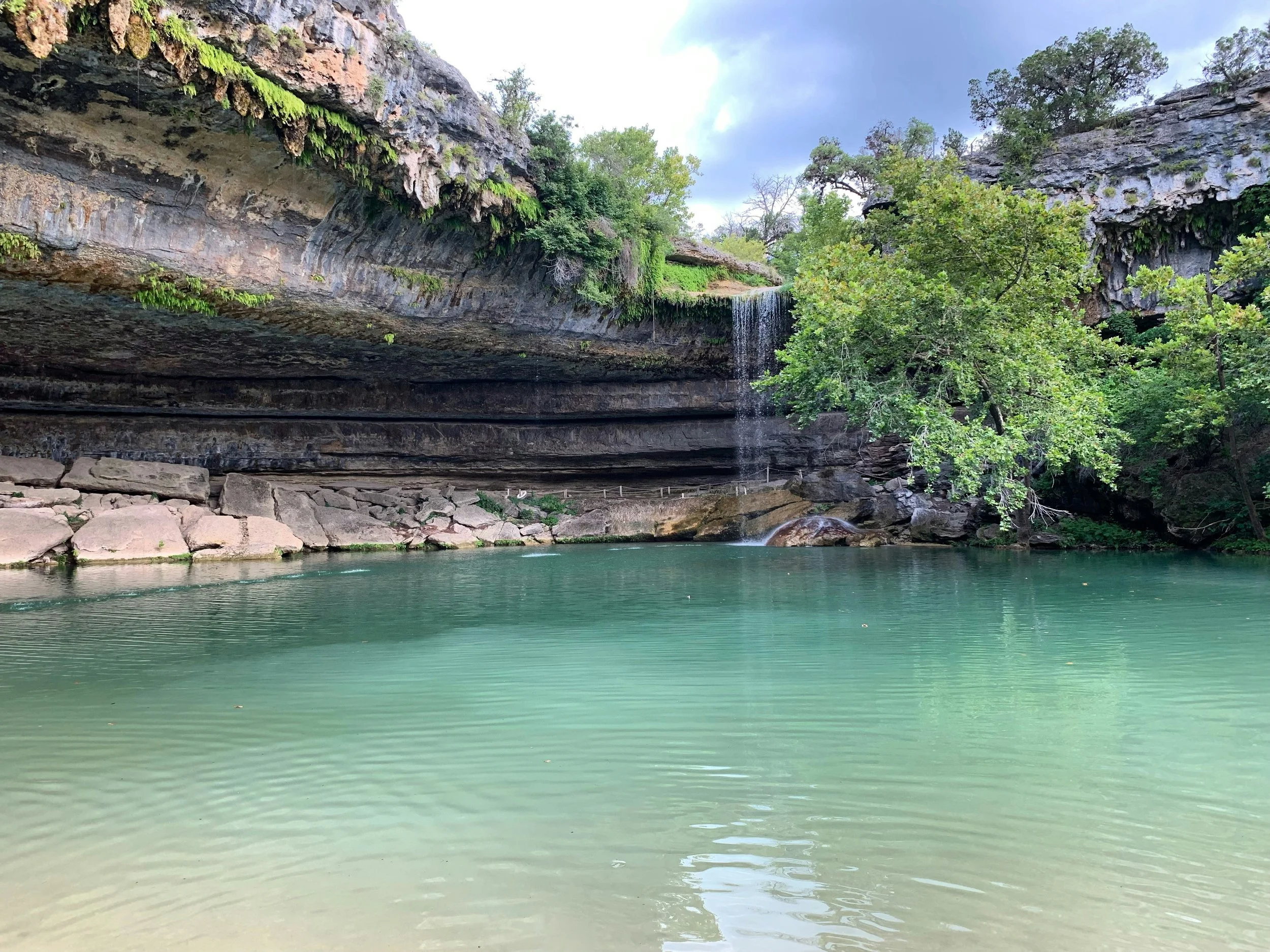
Image by Thomas Brushel on Unsplash
Psalm 84 is a classified as Zion psalm. It depicts Israel’s heartfelt longing for the temple and a group of pilgrims on their way to worship there.
“How lovely is your dwelling place,
O Lord of hosts!
My soul longs, indeed it faints,
for the courts of the Lord;
my heart and my flesh sing for joy
to the living God.Even the sparrow finds a home
and the swallow a nest for herself,
where she may lay her young,
at your altars, O Lord of hosts,
my King and my God.
Happy are those who live in your house,
ever singing your praise.Happy are those whose strength is in you,
in whose heart are the highways to Zion.
As they go through the valley of Baca,
they make it a place of springs;
the early rain also covers it with pools.
They go from strength to strength;
the God of gods will be seen in Zion.”
Decades ago, I was invited to speak to a group of nuns, and I used the term “pilgrims’” disparagingly. This was in the ’60s, a time of social action, and I was upset with those Christians who seemed to have little interest in this world but were on their “pilgrimage” to heaven. The nuns objected in no uncertain terms, telling that their pilgrimage was not otherworldly but of care for this world and its people.
Unique to Psalm 84 is its emphasis on the fact that the pilgrims make a difference as the journey on their way to Zion.
“As they go through the valley of Baca they make it a place of springs.”
But how do they do that? According to Jewish scholar Robert Alter, “A miraculous manifestation of divine grace is vouch saved to the pilgrims. As they come through the Valley of Baca on the way up to Mount Zion, springs gush.”
The very presence of the pilgrims makes spring gush forth in a dry valley? That sounds very much like what I have called an “environmental impact statement.” The very presence of pilgrims on the way to Jerusalem changes the environment for the better.
There are in fact such environmental impact statements in the Bible. For me, the most striking is one in which the “environment” itself speaks about environmental impact.
When the Lord has given you rest from your pain and turmoil and the hard service with which you were made to serve, you will take up this taunt against the king of Babylon:
“How the oppressor has ceased!
How his insolence has ceased!
The Lord has broken the staff of the wicked,
the scepter of rulers,
that struck down the peoples in wrath
with unceasing blows,
that ruled the nations in anger
with unrelenting persecution.
The whole earth is at rest and quiet;
they break forth into singing.
The cypresses exult over you,
the cedars of Lebanon, saying,
“Since you were laid low,
no one comes to cut us down.” (Isaiah 14:3-8)
The gigantic cedars of Lebanon were a favorite source of material in biblical times, including in fact the temple in Jerusalem. This is one of the many biblical environmental impact statements that describe the effects of events not only on people but also on the environment. Here the earth sings, and the cypresses and cedars rejoice! Other impact statements are unfortunately less happy.
Hezekiah boasts:
“I have gone up the heights of the mountains,
to the far recesses of Lebanon;
felled its tallest cedars,
its choicest cypresses.” (2 Kings 19:23)
What about the effects of pollution?
“The earth dries up and withers;
the world languishes and withers;
the heavens languish together with the earth.
The earth lies polluted
under its inhabitants,
for they have transgressed laws,
violated the statutes,
broken the everlasting covenant.” (Isaiah 24:4-5)
So what about us? Have we, likes the cedars of Lebanon, rejoiced over a renewal of the environment or have we polluted it by breaking our covenant with the earth? Under our dominion, will “springs gush forth” or will the earth “dry up and wither”?
It matter for ourselves, our kids, and for public health. That hardly needs to be said of course. According to the World Health Organization, “Environmental pollution poses significant risks to public health, causing or exacerbating various diseases, including respiratory and cardiovascular problems, cancers, and developmental issues, particularly affecting vulnerable populations like children and the elderly.”
So, yes, it matters. Our job is not to pollute the earth but rather, as God said to Adam, it is to “till and keep” it (Genesis 2:15).

Fred Gaiser
Fred Gaiser is Professor Emeritus of Old Testament and Editor Emeritus of the journal Word & World at Luther Seminary in St Paul.
He is the author of the book Healing in the Bible.
At the seminary he was Director of the Luther Seminary in Zimbabwe program. He has taught often in Zimbabwe and other African countries.